Avoiding heat exhaustion in cats
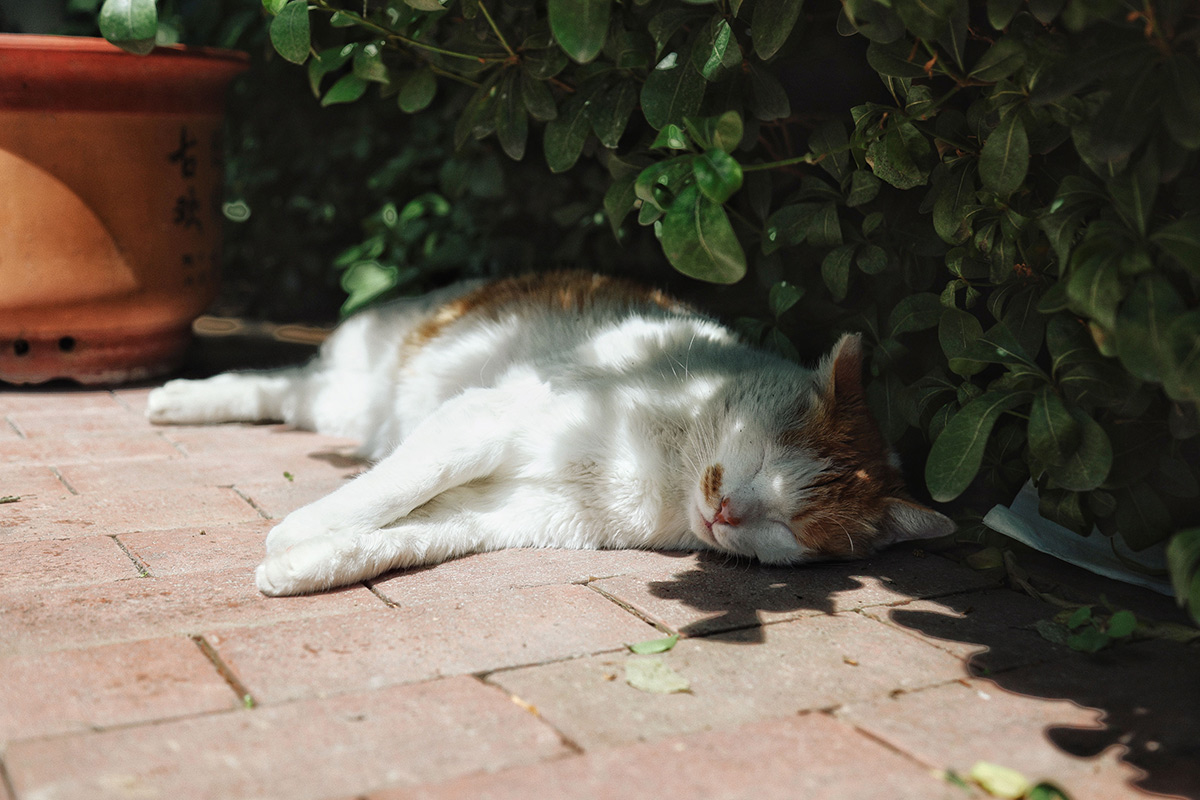
With the high temperatures we’ve been experiencing in the UK recently, it’s really important to keep an eye on how our cats are coping too. Just like humans, cats can also suffer from heat exhaustion and heat stroke, but they have less ways of keeping cool.
As a rough guide, temperatures above 27°C can be uncomfortable for cats, with temperatures above 32°C greatly increasing the risk of them overheating. Some groups of cats are also more at risk than others – kittens, senior cats (7+), cats who are overweight and cats with heart/breathing problems may face additional challenges.
Signs your cat may be overheating:
- Rapid or open-mouth breathing.
- Drooling.
- Lethargy or weakness.
- Bright red or pale gums.
- Vomiting or diarrhoea.
- Unsteady walking.
- Confusion, collapse or seizures.
Whilst the human body sweats to help us keep cool, cats are only able to sweat in very small amounts, from specific hairless areas of their bodies like their paw pads, lips, and around their chin. For cats, sweating is not their main way to cool down, and they will rely more on grooming and behaviour changes to regulate their body temperature.
How cats actually cool down:
- Grooming: Licking their fur lets saliva evaporate to cool their bodies.
- Resting: They sprawl out on cool tiled floors or in the shade.
- Panting: Cats rarely pant unless they are extremely hot or stressed, which can be a sign of overheating.
Ways to keep your cat cool:
- Provide fresh, cool water in multiple locations throughout your home.
- Create a cool indoor environment using curtains, fans, or air conditioning (if you’re lucky enough to have it).
- Limit outdoor time during the hottest parts of the day.
- Promote airflow and ventilation through open windows.
- Offer cool surfaces for your cat to rest on, such as pet-safe cooling mats or ice packs wrapped in a tea towel.
- Brush long-haired cats regularly to remove excess fur.
- Gently apply cool water to their coat with a damp cloth or sponge or use a mist spray to gently dampen their fur.
Note: It’s important to stress that you should never use ice-cold water to try and keep your cat cool. The extreme temperature difference can trigger dental pain, cause stomach cramps or nausea, and may even deter them from drinking again which can then quickly lead to dehydration.
Hopefully you’ll find some of this information helpful and can use it to help your cat, but if you have any concerns about your cats’ welfare then please always contact your vet for professional advice.
To learn more about any of our services please call or WhatsApp us on 07741 943150 for a chat, or let us know your requirements using our enquiry form and we’ll get straight back to you.
Related Posts
Drop-in house sitting provides the continuity and peace of mind you get with a live-in house sitter, but without the cost. You don't even need to own a cat! Visits are tailored to your requirements and regular updates provided.
This week is National Pet Sitters Week. There are lots of us out there offering what appear to be similar services, so how do you choose the right one for you and what should you look out for?